

How does SRC manage our waste?
SRC is committed to taking responsibility for the waste produced within our organization and ensuring as much as possible is reduced, recycled, or repurposed. In the past several years we've made significant changes to our waste handling. Knowing where our trash, recycling, and compost end up helps us keep track of exactly how we're making a difference. Keep reading to see how we do this—and to borrow some ideas for your home or workplace!
SRC's waste management practices
Recycling with Ridwell
Some materials are more difficult to recycle than others, such as plastic film, batteries, lightbulbs, and threads. Often, items like these are thrown away every day without a good recycling or reuse solution. Ridwell’s Minneapolis branch offers local customers a way to dispose of these (and other) items responsibly. SRC receives bags to sort and collect items, and they are picked up every two weeks. Click here to learn more about Ridwell’s recycling categories, services, and/or subscription options.
EPS Recycling
Expanded polystyrene (EPS), a close relative of Styrofoam, is plastic-based, bulky, and composed mostly of air. This non-biodegradable material takes up space in the landfill and can take centuries to break down.
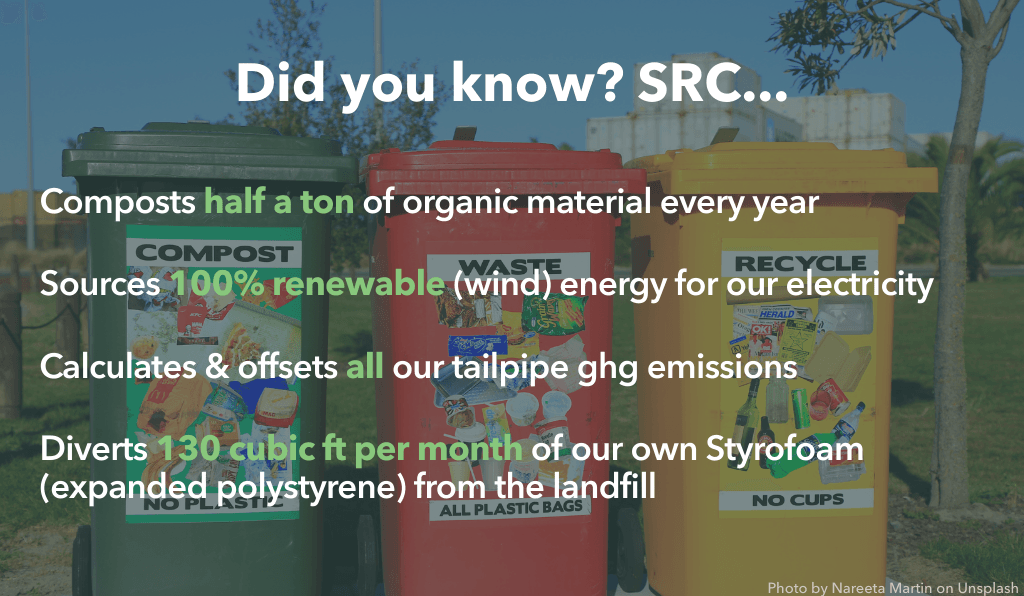
Every year SRC routinely delivers and installs large numbers of air conditioners and dehumidifiers which are transported in their original packaging and rely on EPS to protect them from damage before installation. When an appliance is installed, instead of throwing away the packaging, we take the EPS back to our warehouse where it is prepared to be sent to a third-party recycler. By doing this, we have calculated that 130 cubic feet per month (equivalent to 50 pounds) of EPS is diverted from the landfill and removed from the waste stream.
Composting
Every week, SRC sends about 20 pounds of organic waste (paper towels, coffee pods, food waste, etc.) to be composted. Over the course of a year, that amounts to half a ton of waste that is composted instead of trashed.