
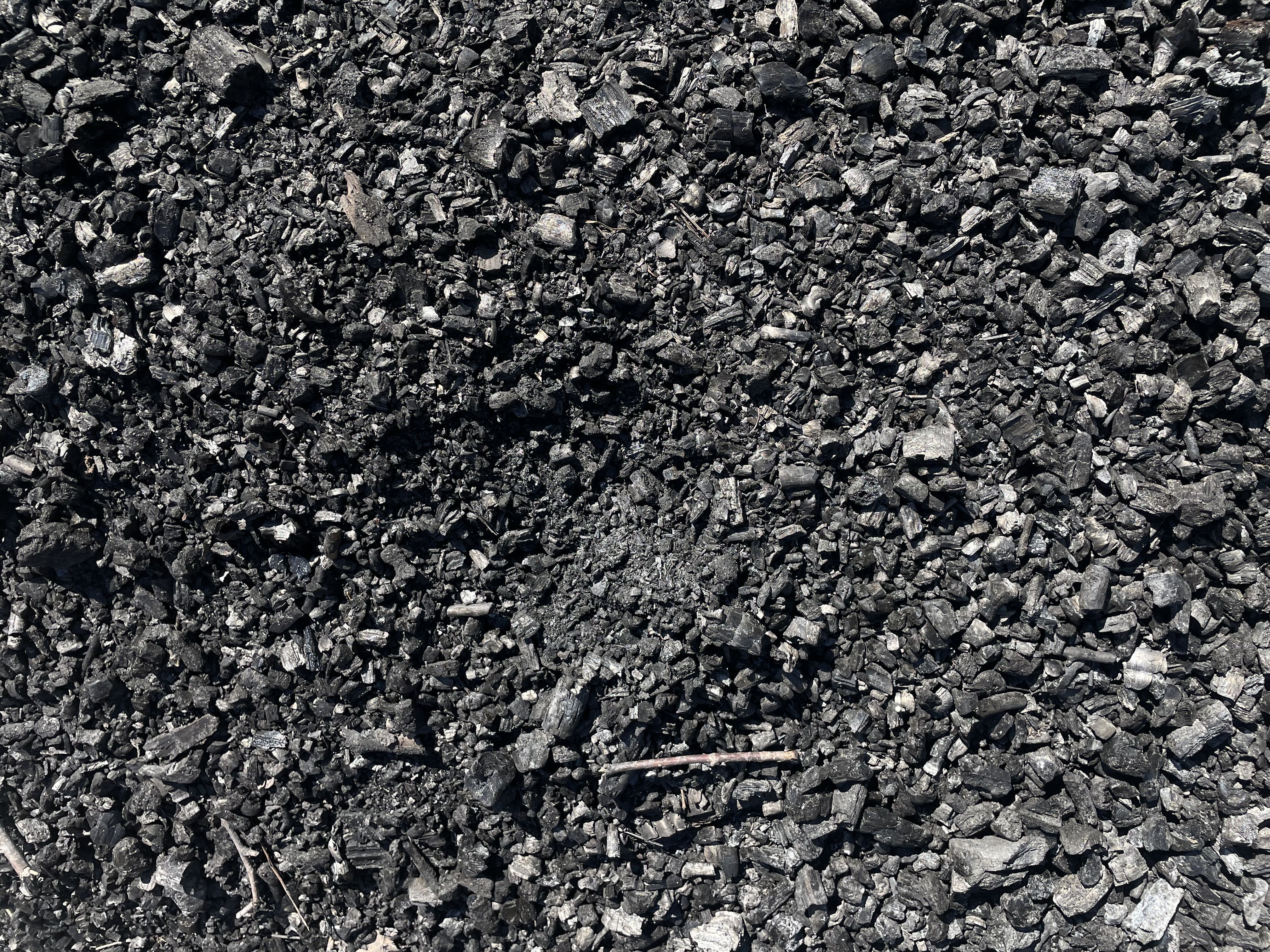

SRC has partnered with St. Olaf College to explore the possibilities of biochar, a reimagined approach to effective carbon storage and sequestration
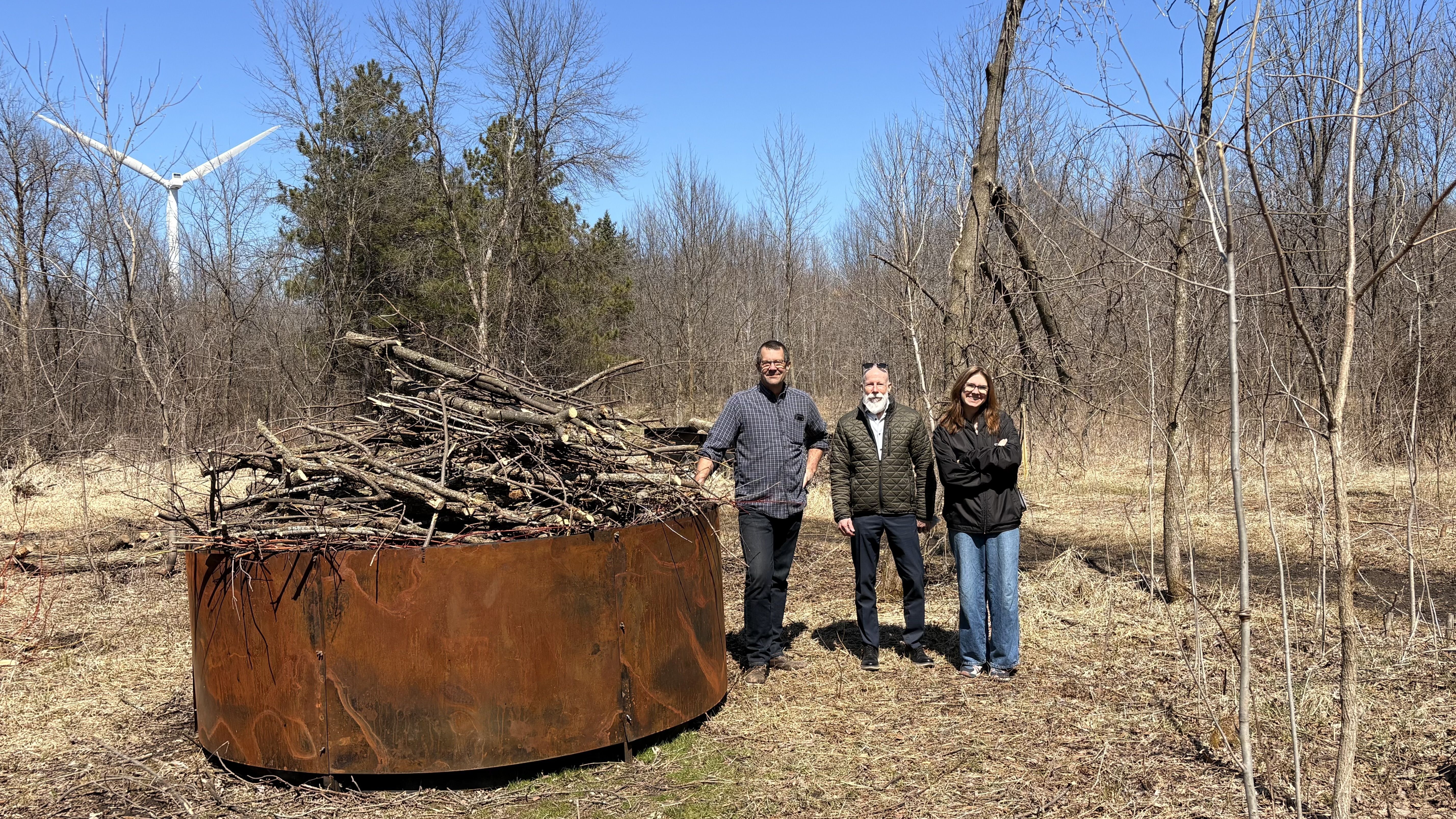
St. Olaf faculty and SRC staff stand next a flame-cap biochar kiln. April 10, 2026
What is biochar?
Biochar is a charcoal-like substance that is created when organic material like wood and brush are heated at high temperatures long enough to char the material, but without enough oxygen to burn it to ash. Open-burning flames like bonfires have complete access to the oxygen in the air, meaning the feedstock burns completely, resulting in smoke and other emissions being released.
Biochar kilns, on the other hand, only use minimal amounts of oxygen, so the wood’s carbon that would have escaped as greenhouse gases can be locked into its final product—biochar. This process is called pyrolysis.
About 70-80% of the carbon from the organic material (or the feedstock) remains in a stable and solid form when the feedstock is pyrolyzed into biochar, which makes biochar an effective carbon sequestration solution.
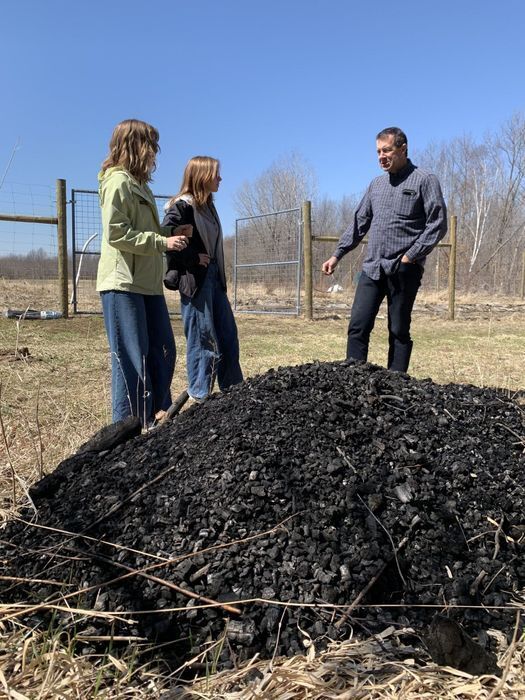
SRC staff and St. Olaf faculty standing behind a biochar pile.
By treating organic waste as a feedstock rather than a waste pile, Natural Lands staff can effectively sequester carbon while drastically reducing their own organic waste volumes. With its significantly lower emissions and carbon sequestration abilities, biochar is the option that fits with both partners’ sustainability goals.
Benefits of Biochar
Biochar has several key benefits, including:
- long-term carbon sequestration
- increases soil nutrient content
- increases water retention in soils
- absorbs contaminants in water and soil
- improves crop yields
About the project
By providing St. Olaf College with two different biochar kilns, this project aims to promote experiential learning by allowing students, faculty, and staff to explore and refine the process of producing and applying biochar. While the College and its students will manage day-to-day maintenance and experimentation, SRC as the equipment provider will follow along with the research that results from this collaborative project.
In the first three months of the project, this is what the new biochar kilns have accomplished around campus:
18,000 lbs of woody biomass diverted from emitting greenhouse gases
3,000 lbs of biochar produced
68 students engaged in activities surrounding biochar
3.4 MTCDE stored
About the kilns
One kiln is being used for sustainable land management projects like responsible disposal of invasive species. This kiln, known as a flame-cap kiln, is able to process woody feedstock like the brush that is often maintained around the College’s Natural Lands. Its large ring design has been adapted from a biochar creation technique used around the world.
The other kiln is known as a retort kiln. It's enclosed, smaller in size, and serves as a tool for faculty and student biochar research projects and quality testing.
The College is actively involving students, faculty, and staff in this project, with Natural Science faculty leading 2-3 students in biochar research this summer.
Left: St. Olaf faculty and SRC staff observing the flame-cap kiln. Right: SRC staff standing next to the retort kiln to show scale.
Why biochar?
The St. Olaf Natural Lands consists of over 400 acres of natural ecosystems that must be consistently maintained to remain healthy and free of invasive species like buckthorn, which can quickly take over wooded areas. This maintenance creates organic waste such as tree clippings and brush, from which, when left to decompose or openly burn, carbon dioxide and other greenhouse gases escape, contributing to the warming of our climate.